
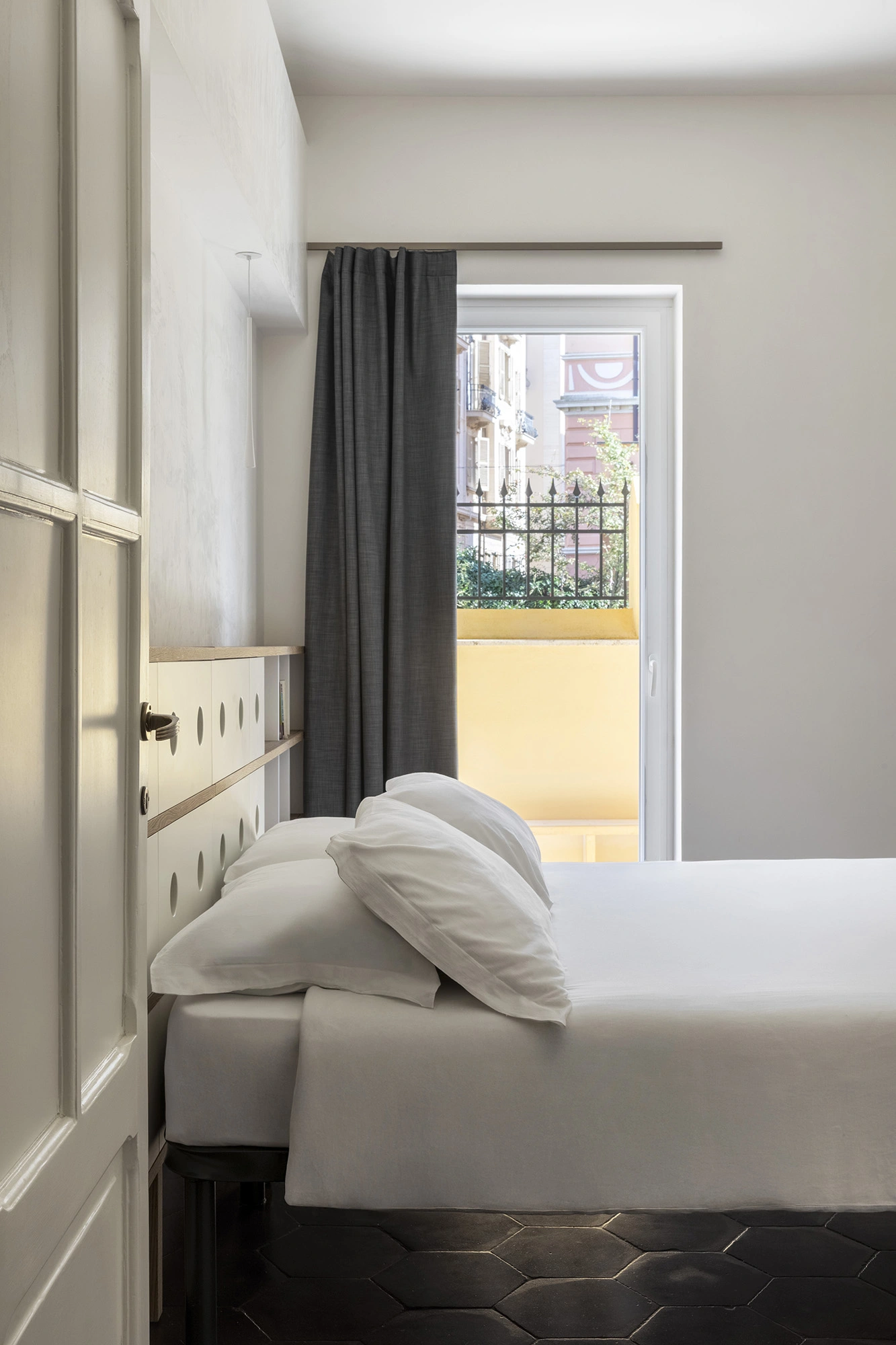
A rapidly growing phenomenon: the evolution of tourism has shifted preferences away from large hotels towards more personal and flexible forms of hospitality. A trend that began in the US with platforms such as Airbnb is now a diverse and well-established industry, offering clear advantages over traditional long-term rental models. But in an increasingly competitive market, how do you build a hospitality project that truly works?
The idea of the holiday home is as old as mass tourism itself: seaside houses, summer retreats, French gîtes. What changed radically in the 2000s was the digital transformation of the sector. First VRBO (1995), then Airbnb (2007), made the market accessible to almost anyone with a spare room to rent. From there, growth accelerated rapidly. Today, extra-hotel accommodation is no longer simply a low-cost alternative to hotels: in many cases, it is the preferred choice, thanks to flexibility, authenticity and convenience. A vast, varied and increasingly competitive market.
Who this article is for
This article is aimed at anyone operating within this sector:
-Property owners looking to unlock the value of an asset; -Buyers considering a hospitality investment; -Operators planning to lease and manage an accommodation business
Around this sector, entirely new professional roles have emerged over the past few years: the Property Manager, the Revenue Manager, the Home Stager. An entire ecosystem that says more than any statistic about how much this market has evolved and matured. And the market itself is anything but simple: short-term rentals, holiday homes, guesthouses, B&Bs, agriturismi, serviced residences, hostels, holiday houses, alberghi diffusi. Each model comes with its own regulations, taxation, management structure and regional classifications, which often vary significantly across Italy. Choosing the right hospitality model is not a minor detail: it is already part of the strategy.
Such a rich and articulated landscape is, inevitably, also highly competitive. So the real question becomes: in a market this crowded, how do you create a project that performs well and generates sustainable income?
Where to open: debunking the myth that “only city centres work”
A hospitality project succeeds when it responds to real demand, not simply because it is located in a fashionable area. The real question is not “where would I personally like to stay?”, but rather: “who actually needs accommodation here?”
A few examples:
-Near a major hospital hub such as the Policlinico in Bologna or Gemelli Hospital in Rome: families of patients, visiting doctors and researchers. A steady, year-round demand.
-In regions such as Chianti, the Langhe or the Euganean Hills: travellers are not looking to stay in the city centre — they specifically want to be immersed in the countryside.
-Close to major outlet destinations such as Serravalle Scrivia or Castel Romano: weekend shoppers and international visitors combining shopping with short stays. A segment that is often underestimated.
-In inland villages across Calabria, Basilicata or Sicily: properties can still be acquired at relatively low prices, while demand is growing among travellers seeking authenticity away from mass tourism.
-Near exhibition and trade fair districts such as Milan, Rimini or Verona: room rates during major events can easily triple.
This reasoning applies both to those who already own a property in a specific area and to those still evaluating where to invest. A location alone does not determine the success of a hospitality project. What matters is the demand the property is able to intercept.
Design and business strategy
Earlier we mentioned how success depends on understanding and intercepting demand. But intercepting demand first requires understanding your target audience or audiences. In an increasingly saturated market, specialisation is no longer a luxury: it is one of the few real competitive advantages. Your target is not merely a marketing detail; it is the starting point of the entire project.
The hospitality model
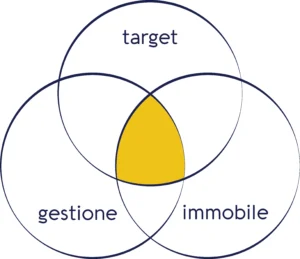
A successful hospitality model is built on balancing three variables: target, management, and property.
Choosing the right hospitality model comes from balancing three variables: the target guest, the level of operational involvement you are willing to sustain, and the property’s inherent characteristics.
Target guests and the hospitality model are deeply interconnected, because each type of accommodation responds to specific guest expectations and traveller profiles. For example, an agriturismo in Tuscany naturally appeals to travellers looking for authenticity, nature and local food culture, while a B&B may better suit couples or travellers seeking simplicity and a more personal atmosphere. Likewise, a high-end holiday home or rental villa caters to guests with greater spending power who prioritise privacy, independence and comfort, while a hostel is ideal for younger travellers or backpackers looking for affordability and social interaction. Defining the buyer persona clearly allows the hospitality model to become coherent with the overall guest experience and positioning strategy.
The management aspect is equally important. A standard short-term rental is a relatively light operational model, suitable for owners who want to generate income without radically changing their day-to-day lives. B&Bs and guesthouses with multiple rooms require a much more structured operational setup, involving regular cleaning, check-ins and guest turnover — essentially functioning as a true hospitality business.
The property itself must also be considered carefully. If you own a 150 sqm apartment within a residential condominium, transforming it into five bedrooms with five bathrooms may not necessarily be the right choice. Building regulations and condominium rules must be assessed carefully, but there is also a broader long-term consideration: excessively aggressive transformations may compromise the future flexibility of the property. If the apartment were to return to residential use in a few years, reversible interventions would retain far more value than highly specialised permanent alterations.
Design
Having a clearly defined niche is equally essential for the architectural project itself. Design is positioning.
A masseria in Puglia focused on experiential tourism will naturally adopt a restrained and evocative language: local materials, natural textures and spaces that highlight the history of the place. A property near a railway station in a large city, aimed at younger travellers and short stays, may instead draw inspiration from contemporary hostel design: smart, colourful, highly functional and technology-driven.
Again, long-term flexibility should remain part of the conversation. If the property returns to residential use after five or ten years, an excessively specialised project may become problematic. Good design always considers reversibility from the outset.
What applies to every hospitality project
Regardless of target audience, location or hospitality model, certain principles remain universal across all accommodation projects: comfortable beds, preferably modular solutions, efficient systems for heating, cooling and hot water, and furnishings designed not only for aesthetics but also for operational practicality. We explored these aspects in more detail in the article: Interior design for holiday rentals.
Project and renovation costs
The decisive factor is always the starting condition of the property.
Property in good condition
If the property is relatively recent or already renovated, this does not automatically mean it is ready to generate strong returns. It does, however, often mean that a full refurbishment may not be necessary. The key question becomes: what is actually required to transform it into a hospitality property that performs well? The process usually starts with mandatory requirements, small regulatory adaptations and targeted furnishing interventions aligned with the intended audience. Sometimes even a minor layout modification can completely change the commercial potential of a property. In these cases, the real added value does not come from construction work itself, but from the strategic thinking behind the project: targeted interventions, controlled costs and a relatively fast return on investment.
Property requiring renovation
This is often the most demanding scenario, but also the most interesting one. Starting almost from scratch allows every square metre to be optimised: spaces can be redistributed intelligently, different hospitality models can be evaluated, and more ambitious real estate strategies become possible. The initial investment is higher, but the result is a property designed specifically for hospitality purposes, without compromises inherited from previous residential layouts. In most cases, projects conceived from the outset with a hospitality-driven logic tend to perform better commercially and justify higher rates. A higher investment, but also a stronger result and a more coherent asset.
The logic of ROI — Return on Investment — should come before the building site itself. Expected profitability should be calculated before spending a single euro. Architectural strategy and financial strategy must work together from the very beginning. Without that alignment, the project becomes speculation rather than strategy.
Three case studies from the Amnios Architettura portfolio
Three properties, three different starting points, three different strategies. Here is how the principles discussed so far translate into real projects.
Case A: Villa Pratolauro. Short-term rentals, light and gradual intervention
The villa already had a solid base condition: no major renovation work was required, but there was significant untapped potential. The initial intervention was simple and highly targeted: air conditioning in every room, conversion of secondary spaces — such as the study, small gym and service room — into additional double and triple bedrooms, alongside careful ordinary maintenance, from repainting to finishing touches. Nothing more than what was necessary to launch the property successfully.
After one year of operation, and with a much clearer understanding of the market and guest profile, a more strategic investment followed: the creation of a SPA area. Under an existing canopy that originally housed a ping-pong table — now simply relocated — a relaxation space was developed around a six-person Jacuzzi mini-pool, enclosed with panoramic glazing (VePa) and climate-controlled for year-round use. A targeted intervention designed for guests looking for a “holiday within the holiday”, which significantly strengthened the villa’s identity and positioning. The result: considerably higher pricing and substantially increased profitability.
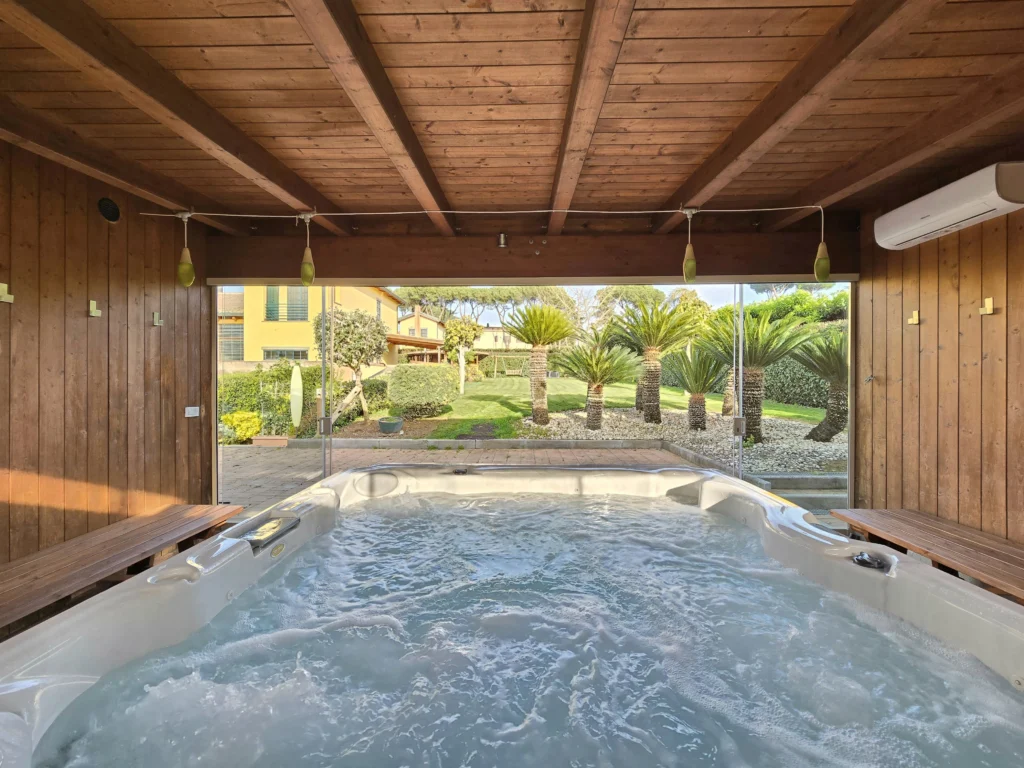
Short-term rentals: Villa Pratolauro.
Case B: Station to Station, Roma Termini. Guesthouse, complete renovation
Station to Station, located a short walk from Rome Termini station, was developed from a neglected 70 sqm property in extremely poor condition — effectively a blank canvas. The original layout consisted of a small two-bedroom apartment with a living room, kitchenette and a single bathroom.
Adding a second bathroom within 70 sqm may seem like a straightforward design move, but in reality it became the decisive strategic intervention. Having as many bathrooms as bedrooms made it possible to adopt the guesthouse model, which, after analysing the local market, proved capable of almost doubling profitability compared to a traditional short-term rental setup. Each room could be rented independently, occupancy rates increased and overall revenue improved significantly.
The location near Termini naturally appealed to a very specific audience: young travellers and backpackers looking for affordable and sociable accommodation. Private rooms, shared common spaces and a living area designed for interaction between guests. From that point onwards, every design choice followed a coherent direction: a smart, colourful and flexible environment with integrated technology and a visual language inspired by the most contemporary hostel concepts. A clear concept, designed to maximise both attractiveness and profitability.
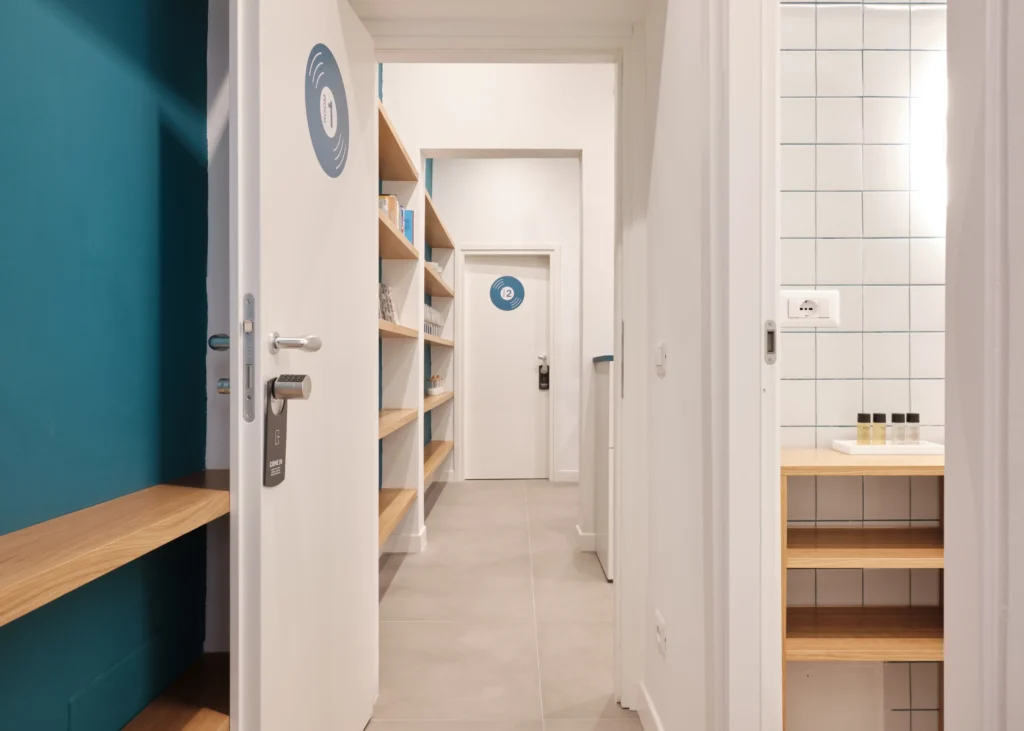
Guesthouse: Station to Station.
Case C: Casa Blu and Casa Verde. Holiday homes, subdivision project
A 120 sqm apartment in a strong location, although in poor condition — which, once again, offered complete freedom from a design perspective. Rather than renovating it as a single property, the decision was made to divide it into two separate holiday homes: Casa Blu and Casa Verde. Two minimal yet distinctive apartments with bold colour palettes and recognisable identities: practical, contemporary, flexible spaces capable of accommodating couples, groups of friends and small families alike.
The logic behind the project was twofold. On one hand, having two separate units almost doubled the profitability compared to operating a single large apartment. On the other, the strategy extended well beyond short-term income. Small and medium-sized apartments in Rome remain limited in supply and highly sought-after within a housing market shaped by smaller households and increasing pressure on residential demand. Whether continuing as holiday homes, switching to long-term rentals or eventually selling the units individually, the subdivision multiplied the property’s future options. Not only higher income today, but also greater asset value tomorrow.
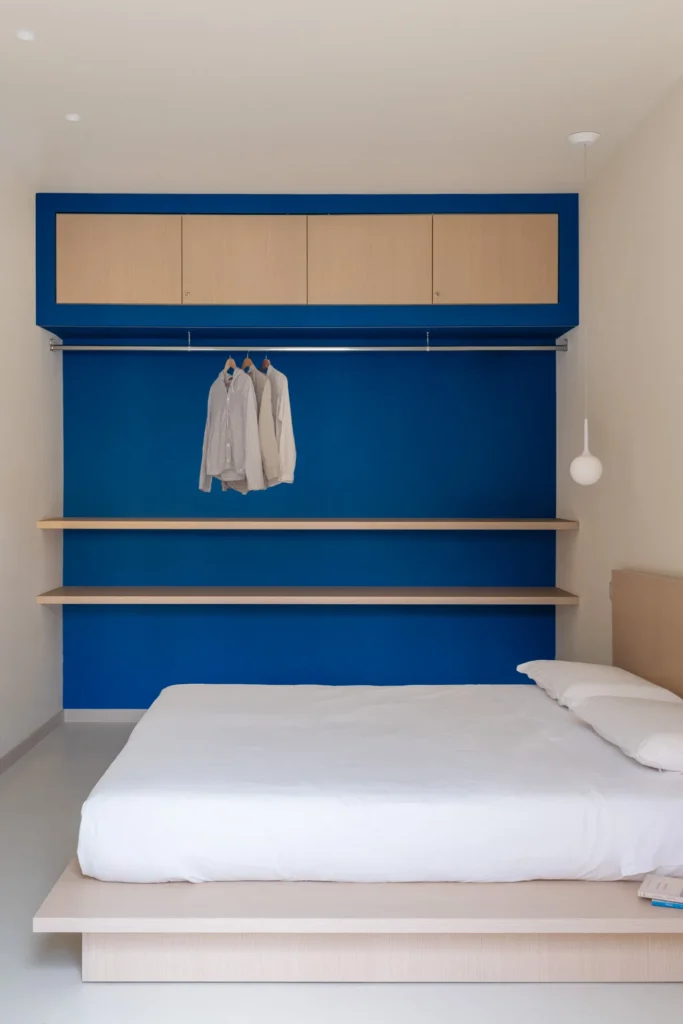
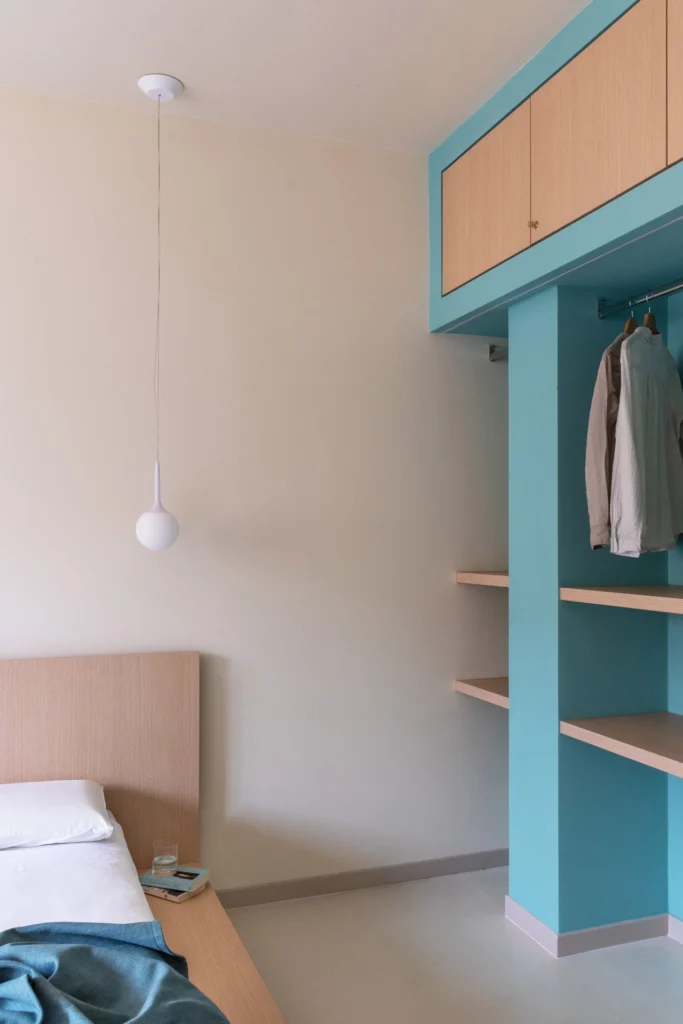
Holiday Homes: Blue House and Green House.
How Amnios Architettura Can Support Your Vision
A successful hospitality project emerges from the intersection of architectural expertise, knowledge of the hospitality market and entrepreneurial vision.
Through a consultancy process, we assess whether your property has the potential to perform well, which hospitality model may suit it best, and what level of intervention is truly required. In some cases, a few targeted adjustments are enough. In others, a complete renovation becomes the more strategic choice.