
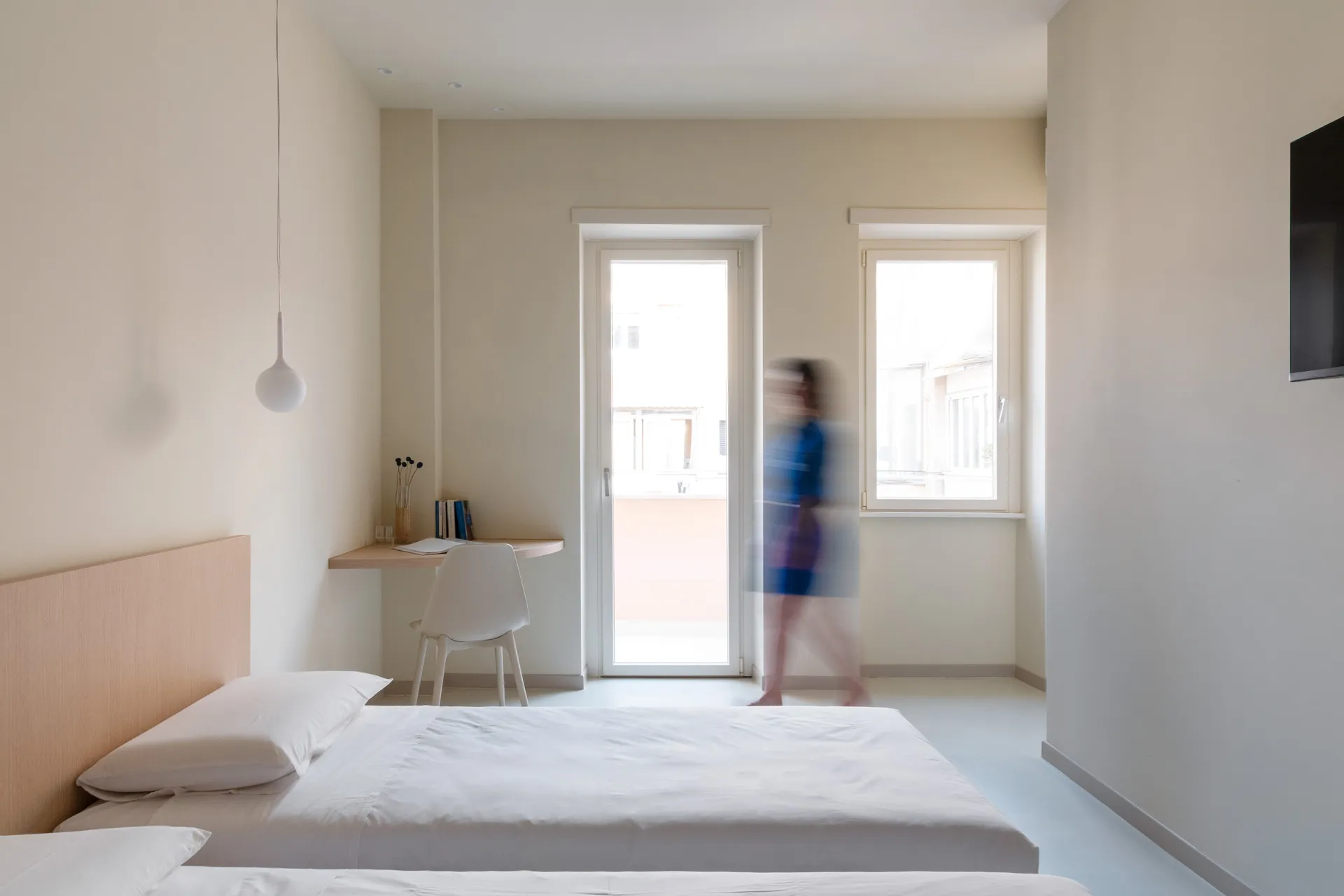
Today, improvised furnishing is no longer enough to stand out in the holiday home market, which has become increasingly crowded and competitive. More and more hosts are investing in renovation, design and distinctive details to differentiate their properties. This year in particular, partly due to the anticipated Jubilee, the sector has experienced another boom, although supply has not grown as much as expected (we discussed this here). In this article, we explore how to design and furnish a holiday home in 2026, drawing inspiration from approaches developed in Rome and applicable to hospitality projects internationally.
Before Furnishing
In this article, we use the term holiday home in a general sense, referring to all types of tourist accommodation and short-term hospitality properties.
Before thinking about interiors, however, a feasibility study is essential: is it really worth entering such a competitive market? If so, which type is best suited to your property, its location and the target you want to attract? And which management model can you sustain over time?
Once these evaluations are complete, the project can take shape: sometimes furnishing is enough, while in other cases renovation is also required. In many cases — as often happens in Rome unless the property has been recently refurbished or already works well — at least a small intervention is advisable, because hospitality properties need to feel contemporary and perform efficiently, and they have different requirements compared to mid- or long-term rentals. This may mean updating outdated systems, making minor layout adjustments to maximise the number of guests allowed by regulations, or simply giving the property a coherent and appealing design that makes it competitive.
An architect specialised in hospitality design can bring all these elements together and identify the right moves to achieve the best result with minimal intervention. Only at that point can we truly talk about furnishing.
How to Furnish a Holiday Home in 2026
- It Must Be Memorable and Appealing
Design today is not a detail, but an investment that pays off.
- According to AirDNA, professionally designed holiday homes can increase revenue by up to +40%.
- A study published on ResearchGate in 2025 (“Visual servicescape analytics: design style and demand in Airbnb from unstructured data”) analysed 562 properties across 28 cities and millions of reviews: accommodations with a contemporary design record significantly higher occupancy rates compared to others.
In markets like Rome — unless you are in a prime historic location or own a period property — having a professional, contemporary and intentional design is essential.
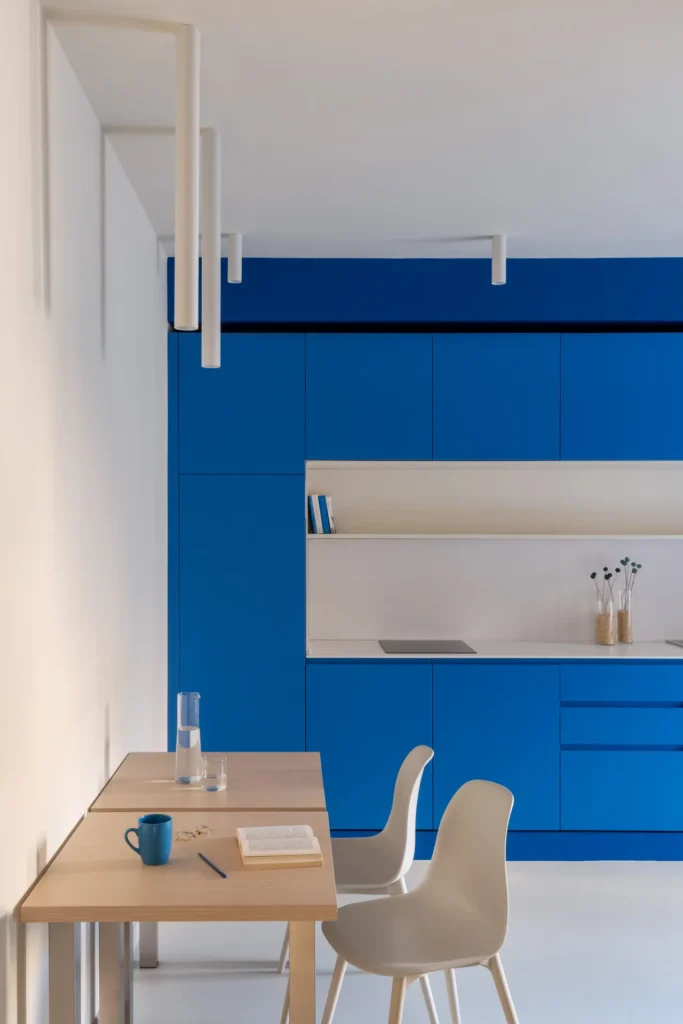
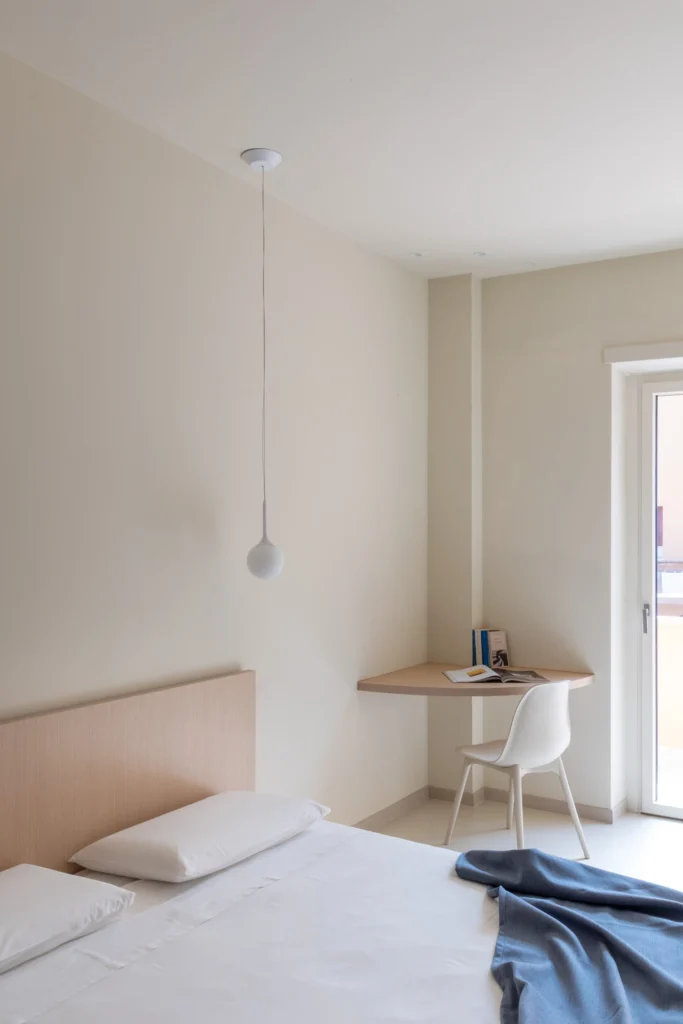
Blue House : living area and bedroom
- Short Stays, Flexibility and Management: Furniture Priorities
The furnishing of a holiday home cannot follow the same logic as a home intended for people who live there permanently for years. In Rome, tourist stays last on average three to four days, and guests can vary widely: a family, a couple or a group of friends.
For this reason, the accommodation must be conceived for short stays, where guests often return only to sleep and usually do not even unpack their suitcase. This means, for example, ensuring maximum comfort for rest — the most important function in any hospitality space — and providing functional, well-designed bathrooms, ideally more than one, since guests tend to use them at similar times of day.
It is useful to design flexible spaces capable of adapting to families, couples, groups of friends or even an additional guest.
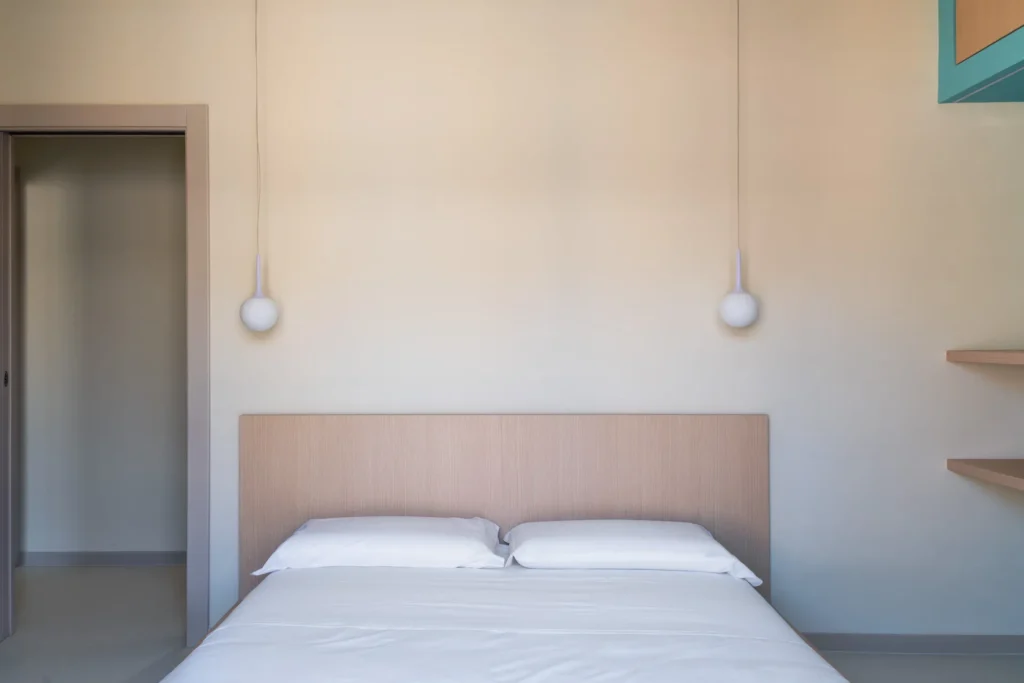
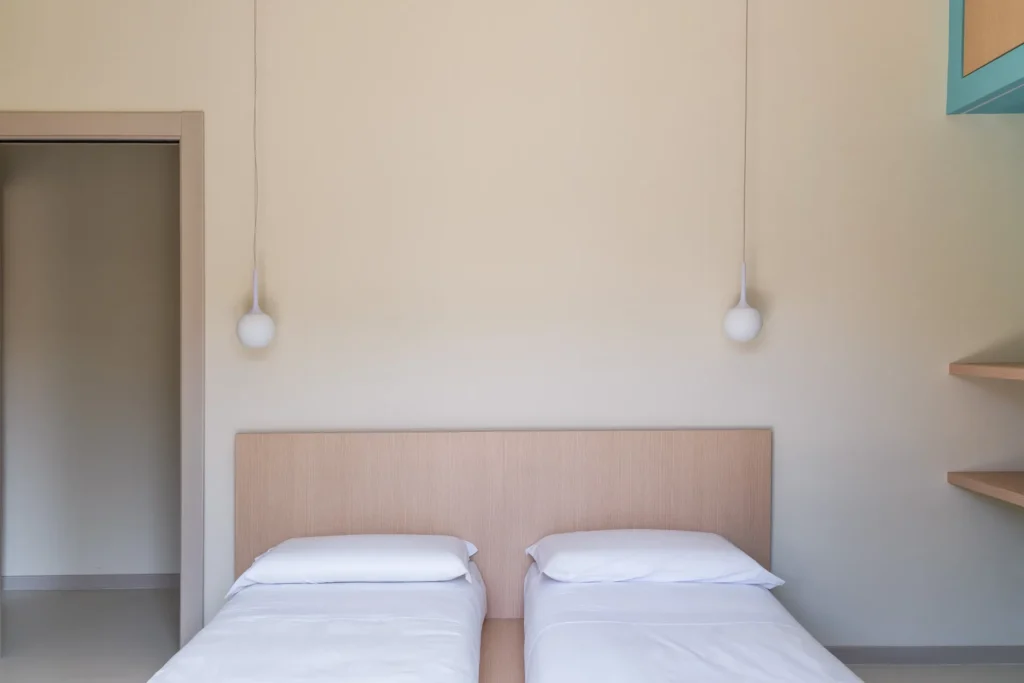
Green House: the raised bed platforms allow different configurations, expanding the booking potential.
The furnishing should prioritise practical, durable and stain-resistant materials that do not wear easily and are simple to clean, together with uncluttered and functional solutions that facilitate management, encourage high-quality cleaning and reduce time and costs. Dedicated storage spaces for linen, supplies and service materials should also be included.
- It Must Offer the Right Amenities
Guests choose by filtering for amenities.
- Airbnb now lists more than 80 amenities, and Booking offers a similar range of facilities.
- WiFi, a fully equipped kitchen, washing machine, air conditioning or parking can determine the choice of accommodation.
Investing in the amenities guests expect is therefore crucial to avoid being excluded already at the search stage.
- A Unique Feature Is a Plus
A special feature or thoughtful element that enhances the experience can make all the difference: a jacuzzi, panoramic terrace, cinema room, breathtaking view or hi-fi system.
- According to AirDNA, listings with unique amenities receive up to +20% more bookings at the same price and location.
- BeyondPricing reports that properties with “wow” features achieve an ADR (Average Daily Rate) 15–30% higher.
- It Must Speak to the Right Target
Design should reflect the audience you want to attract.
- Esempio: “Station to Station”, vicino a Termini, è stata progettata per giovani viaggiatori, con un linguaggio pop e contemporaneo.
- On the contrary, Blue House and Green House, located near the Vatican, feature a more neutral and minimalist language, ideal for families and adult guests.
Making a property distinctive offers a double advantage: it stands out among listings and gives guests the experience of staying somewhere different from their own home.
Conclusion
Furnishing a holiday home requires targeted choices and specific expertise. In such a competitive market, relying on a professional makes it possible to achieve the best result with minimal intervention, transforming the property into an investment that pays off through greater appeal and profitability.
If you want to transform your home into a competitive and successful property, the Amnios team can support you with tailored consulting and design, guiding you from feasibility to management. Contact us by booking a free consultation