
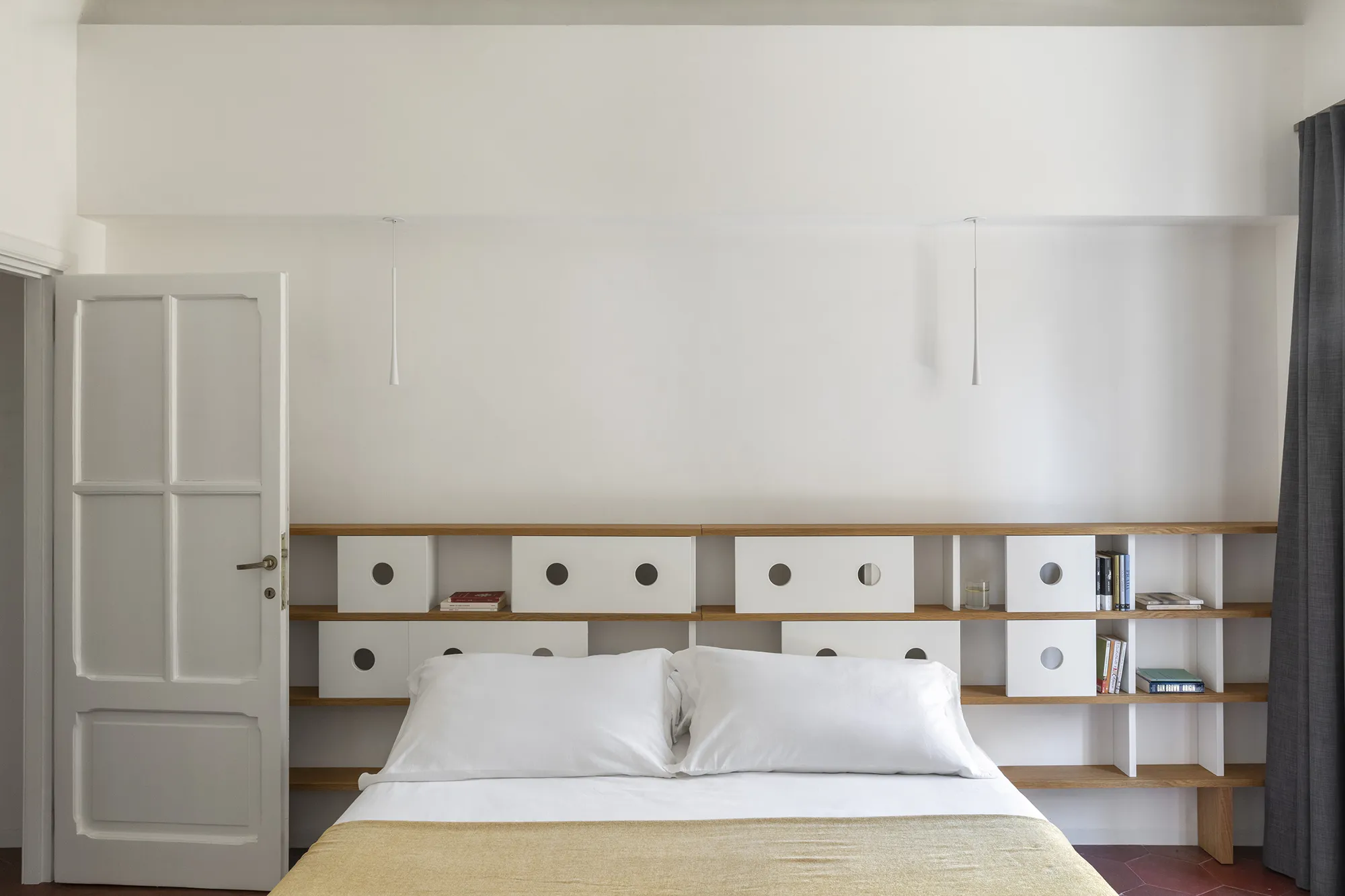
Have you ever looked at a room and thought, 'I wish I could use this space better'?
Those who look for bespoke furniture have often already realised this: when a space doesn’t work as it should, the solution rarely lies in a catalogue.
Unlike standard furniture, designed to fit generic contexts, bespoke furniture works on the specific case: it interprets the characteristics of the space, follows its geometry, enhances its constraints, and responds precisely to the needs and habits of those who live in it.
In this article, you will discover how bespoke furniture fits into a broader historical trajectory, how it can function as a true architectural tool, and what concrete advantages it offers.
By the end of the reading, you will have clearer criteria to understand whether bespoke design is the right answer for your space and your living needs.
Furniture Through Time
In relatively recent times, the term furniture has often been paired with the attribute bespoke, almost identifying a niche within the sector. Yet, if we reflect on it, furniture is by nature bespoke: a unique, handcrafted piece designed to meet a specific need within a precise context.
Since the time of the ancient Egyptians, furnishings such as thrones and seats were made to measure, taking into account the dimensions and physical characteristics of their users. Furniture was therefore born as a tailored element — unique and closely connected to both the individual and the space intended to receive it.
This original nature was challenged only with the Industrial Revolution of the nineteenth century, which introduced mass production and initiated a process of standardisation, reproducibility and replication of objects, furniture included. From that moment on, bespoke furniture became the exception — a category called upon to restore uniqueness, adaptability and a deeper relationship with both space and user.
Bespoke Furniture as Architectural Equipment
When we talk about furniture, it is essential to remember that it always exists in relation to a space, whether interior or exterior. It is never an autonomous entity, but an element that enters into dialogue with its environment.
From this perspective, furniture can be understood as a true piece of architectural equipment — a device capable not only of fulfilling a function, but of improving the quality of the space itself.
In interiors, this approach becomes particularly evident. Integrating bespoke furniture designed in synergy with the architectural container means avoiding a living space that is merely the leftover void between freestanding pieces arranged more or less harmoniously.
This is precisely the difference between filling a space and making it work: in the first case, you start from the furniture and adapt to what remains; in the second, you start from the space and equip it to enhance its potential.
Unlike standard furniture, bespoke pieces shape themselves to the limits of the space, reduce bulk, and adapt to the geometries that host them, allowing necessary functions to be performed without compromising usable area.
Many examples come directly from the history of dwelling: carving niches into wall thicknesses to create storage, equipping window recesses with seating, or placing functions along the perimeter to keep the centre of the space more open. These are ancient gestures, yet extremely contemporary, embodying the most authentic idea of bespoke furnishing as architectural equipment. incarnano l’idea più autentica di arredo su misura e attrezzatura.
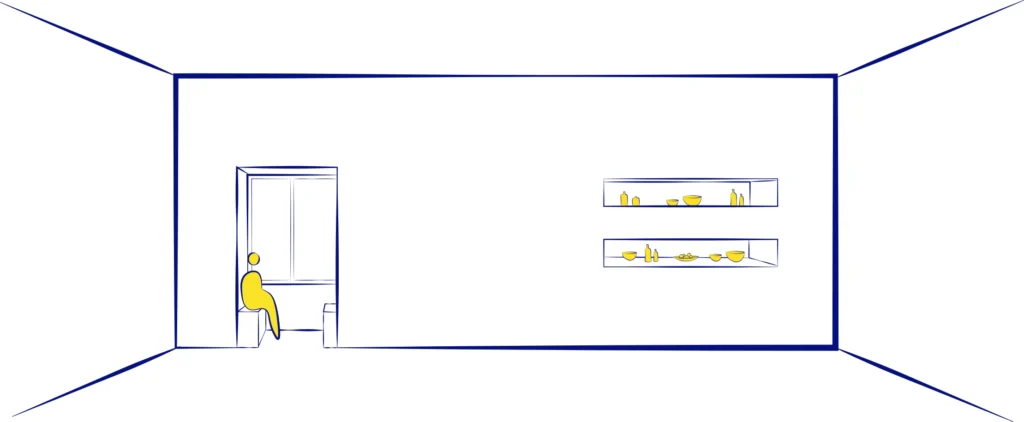
Even today, elements such as masonry niches, fitted shelving systems, or a desk inserted into a window recess represent simple yet effective examples of bespoke design. With just a few precisely cut and shaped planes, storage or working functions can be achieved without invading the space.
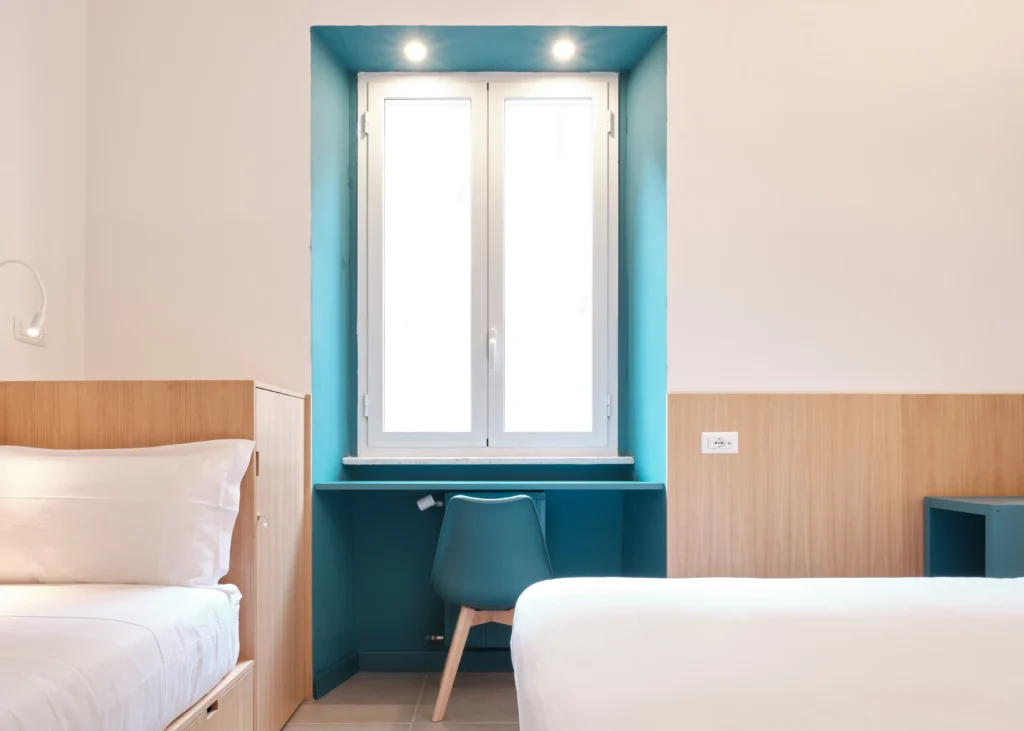
Station to Station : Custom-made desk recessed into the wall niche. inserita all’interno dell’imbotte murario
Similarly, built-in wardrobes integrated into the walls significantly reduce the visual and physical bulk of a bedroom, returning a sense of lightness and usability to the space.
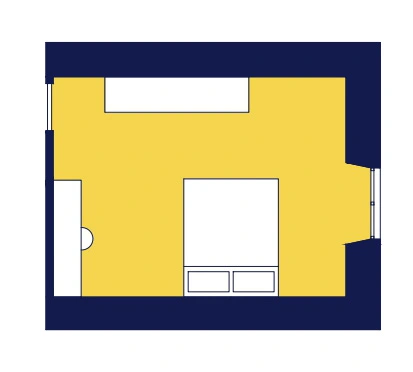
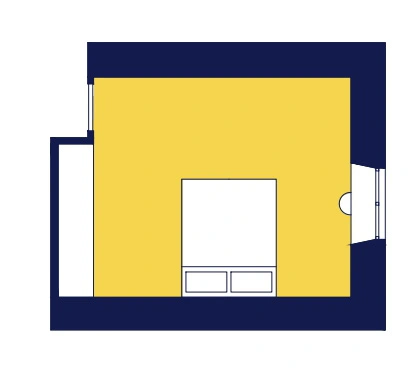
Difference Between Standard Furniture and Built-In Bespoke Furniture
What Are the Advantages of Bespoke Furniture?
Bespoke furniture often acts as a device that preserves as much usable space as possible, maintaining emptiness as a design value rather than a leftover condition.
In small or irregular spaces, this approach becomes even more effective. Tailored design allows functions to be inserted into interstitial areas, to follow complex geometries, and to exploit otherwise unusable surfaces, enhancing every available centimetre.
Another advantage lies in the wide possibilities for choice and personalisation. Designing bespoke furniture greatly expands options in terms of materials, finishes, colours and construction details, freeing the project from the limits of a predefined catalogue. Moreover, when multiple pieces are designed within the same project, it enables a coherent dialogue between different elements, giving the entire space a unified language and overall harmony — rather than a collection of separate items with potentially conflicting materials and styles.
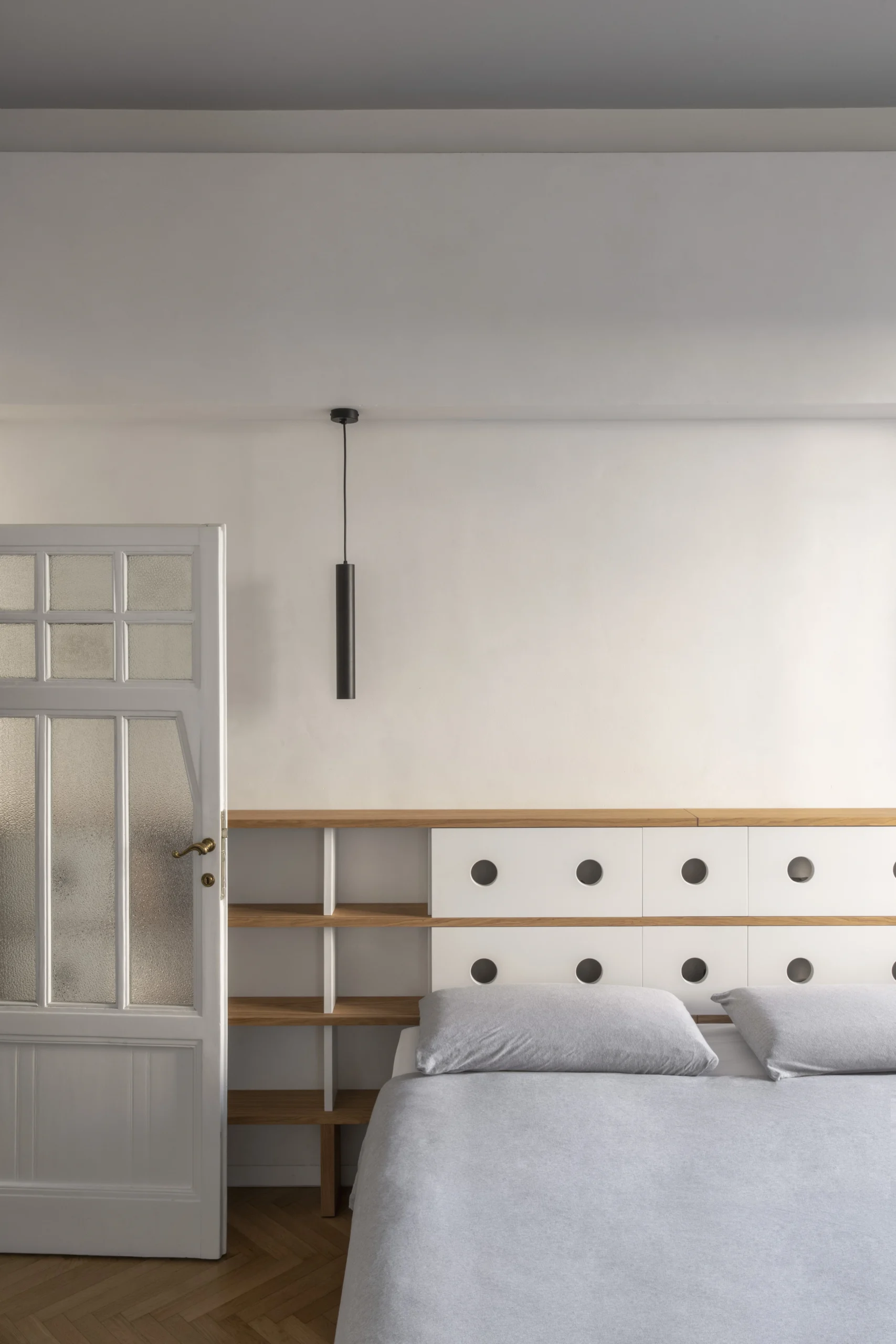
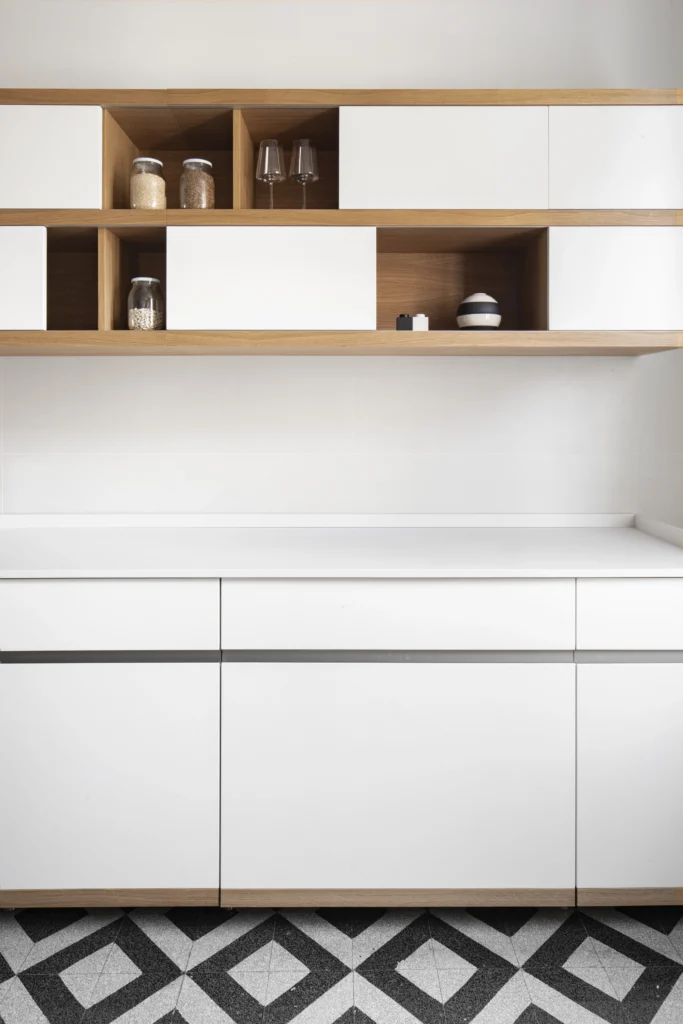
Some bespoke furniture pieces from the Villino Ferrero renovation project, click here to view the full project.
Per concludere...
Choosing bespoke furniture is not always and necessarily the best solution in absolute terms. Like any design decision, it should be evaluated case by case, within an overall vision of the space and the needs of those who inhabit it.
It is often perceived as an additional cost, but this is a myth worth reconsidering. In many cases, bespoke solutions can be achieved through simple gestures: precisely cut surfaces, equipped planes, essential elements that perfectly fulfil their function.
It is therefore worth asking what the real cost is of an underused space — of square metres sacrificed because standard furniture cannot adapt to irregular geometries or specific needs.
Bespoke design is not a standard answer. It is a design choice.Would you like to understand how bespoke solutions can respond to your space?